


Keynote Speakers
KEYNOTE 1: Dr. Hussein IBRAHIM
Centre National Intégré du Manufacturier Intelligent, Québec, Canada
Title: Intelligence énergétique et souveraineté durable : redessiner le futur énergétique des pays en développement pour accélérer leur productivité à l’ère 5.0
Abstract: À l’ère des bouleversements climatiques, géopolitiques et technologiques, les pays en développement sont confrontés à un double défi : sécuriser leur approvisionnement énergétique et accélérer leur industrialisation. Cette conférence d’ouverture propose une vision intégrée de l’intelligence énergétique, alliant technologies émergentes (IA, IoT, réseaux intelligents), production locale décentralisée (énergies renouvelables, stockage d’énergie), sobriété énergétique et autonomisation des systèmes. Elle explorera comment cette approche peut renforcer la sécurité énergétique, stimuler l’innovation industrielle et favoriser des modèles économiques inclusifs, durables et résilients. L’objectif : bâtir des écosystèmes productifs, résilients et décarbonés, capables de soutenir une industrialisation agile et durable. En articulant énergie, technologie et productivité, cette vision trace une voie concrète vers une économie plus autonome, compétitive et inclusive pour les pays du Sud à l’ère 5.0 où la technologie et l’humain sont appelés à conjuguer ensemble pour garantir un meilleur avenir pour ces pays.
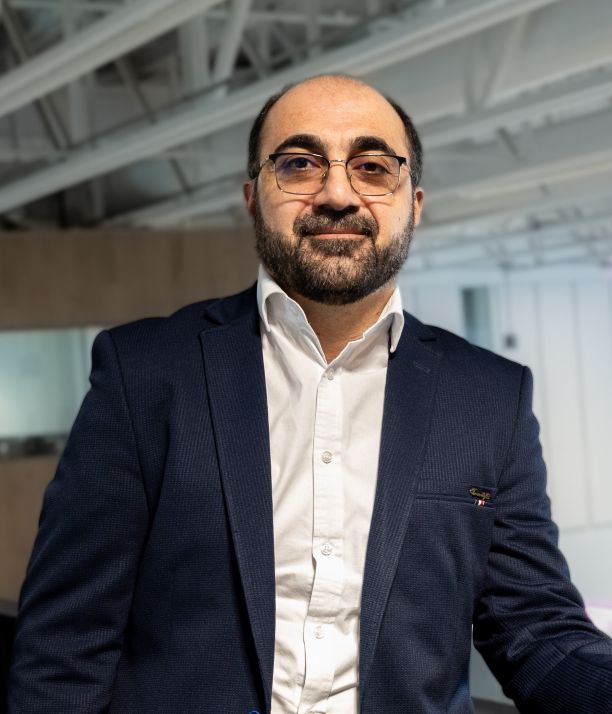 Bio: Hussein IBRAHIM est un expert reconnu en innovation industrielle et en ingénierie énergétique, avec une carrière impressionnante axée sur la recherche appliquée, le développement technologique et la transformation numérique. Actuellement directeur du Centre national intégré du manufacturier intelligent (CNIMI), il a auparavant occupé des postes de direction clés, notamment au Centre de recherche et d’innovation en intelligence énergétique (CR2ie), à l’Institut technologique de maintenance industrielle (ITMI), et en tant que directeur scientifique de Nergica.
M. Ibrahim a consacré plus de 20 ans à l’avancement des projets de recherche en énergies renouvelables, en micro-réseaux et en systèmes énergétiques et industriels intelligents, en collaborant avec des industries et des établissements académiques de renommé mondial. Auteur de plus de 220 publications scientifiques, il fait partie de 2% des chercheurs les plus cités au monde en 2024, et aussi titulaire de nombreuses subventions de recherche totalisant plusieurs dizaines de millions de dollars, il est également actif dans le développement de plateformes technologiques et d’approches collaboratives visant à propulser l’industrie 4.0 et la décarbonation. Sa vision stratégique et son engagement envers l’innovation font de lui un acteur clé de la transformation industrielle au Québec et au-delà.
KEYNOTE 2: Prof. Kamal AL-HADDAD
École de Technologie Supérieure, Montréal, Québec, Canada
Title: Efficient design of power electronics converters to meet energy efficiency and sustainable development targets
Abstract: This presentation will focus on the challenges of producing electric energy from various sources to meet the ever increase in electron demand to power the AI data centres along with transportation and electrification of fast-growing loads. It is assumed that more than 80 % of the produced electric energy is to be processed by power electronic converters; therefore, an efficient design of power stages should consider environmental sustainability criteria to meet the target. Topics include reducing material usage through optimized topologies and the selection of environmentally responsible components. The goal is to inspire engineers to create converters that are not only efficient and high performing, but also responsible stewards of the planet’s valuable and limited resources to ensure sustainability.
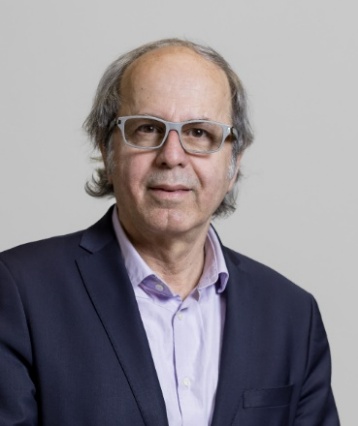 Bio: Kamal AL-HADDAD (Life Fellow, IEEE) received the B.Sc.A. and M.Sc.A. degrees from the University of Quebec à Trois-Rivières, Trois-Rivières, QC, Canada, in 1982 and 1984, respectively, and the Ph.D. degree from the Institute National Polytechnique, Toulouse, France, in 1988. Since June 1990, he has been a Professor with the Electrical Engineering Department, École de Technologie Supérieure, Montreal, QC, Canada, where he has been the Senior Canada Research Chair of Electric Energy Conversion and Power Electronics since 2002. He is a consultant and has established a very solid link with many Canadian and international industries working in the field of power electronics, electric transportation, aeronautics, and telecommunications. He successfully transferred and implemented twenty-four technologies to Canadian and international companies. His research interests include highly efficient static power converters, harmonic and reactive power control, using hybrid filters, voltage-level multipliers, resonant and multilevel converters, including the modeling, control, and development of prototypes for various industrial applications in electric traction, renewable energy, sine wave power supplies for drives, BESS and renewable energy devices. Prof. Al-Haddad is a Member of the Academy of Sciences, Fellow of the Royal Society of Canada, and a Fellow Member of the Canadian Academy of Engineering. He was the IEEE IES President during 2016–2017. He is an Associate Editor for the IEEE TRANSACTIONS ON INDUSTRIAL INFORMATICS and IES Distinguished Lecturer. He was the recipient of the 2014 IEEE IES Dr.-Ing. Eugene Mittelmann Achievement Award, and the IEEE 2023-2024 division VI director. Professor Al-Haddad is the recipient of the 2023 Medal in Power Engineering and the 2024 Québec Industrial Association Research and development ADRIQ Innovation prize. Prof. Al-Haddad is the chair of the IEEE Medal awards committee.